A Powered Pill Identifier is becoming an important idea in digital health because many people struggle to recognize tablets, capsules, and prescription medicines outside their original packaging. A pill may look different after a refill, a family member may find loose tablets at home, or an older adult may mix up medicines while organizing daily doses. In these situations, fast and accurate identification can help reduce confusion and support safer decisions.
Medicine safety is not a small topic. Even approved medicines can cause side effects, interact with other medicines, or cause harm if taken incorrectly. MedlinePlus explains that prescription and over-the-counter medicines can interact with food, alcohol, and other medicines, so users need reliable information before taking anything unfamiliar.
A powered pill identifier can be useful, but it should never replace a pharmacist, doctor, poison center, or official drug information source. The safest rule is simple: do not take a pill if you are not sure what it is. Use identification tools as support, then confirm important details with a qualified health professional.
What Is a Powered Pill Identifier?
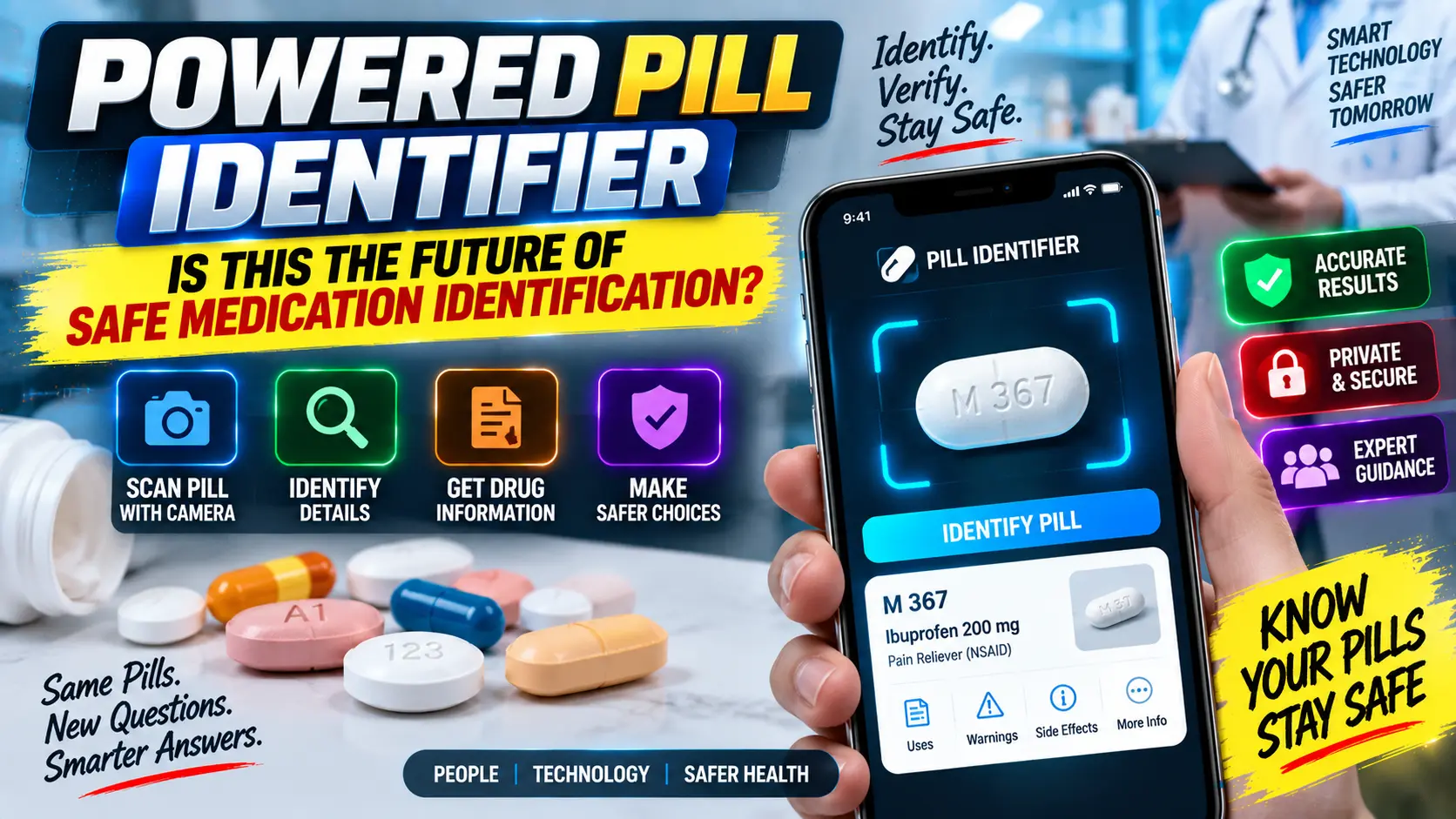
A Powered Pill Identifier is a tool that helps users identify a tablet or capsule by using details such as imprint, color, shape, size, and sometimes an image. Traditional pill lookup tools ask users to enter the letters or numbers printed on the pill, then narrow results by shape and color.
Poison Control’s pill identifier says users can search by the letters or numbers on a pill, its shape and color, or the medicine name. It also points users toward help if they may have taken too much or the wrong medicine.
A more advanced powered pill identifier may use artificial intelligence, camera scanning, image comparison, barcode scanning, and database matching to make the process faster. Instead of typing every detail manually, a user may take a clear photo and receive possible matches. Still, the final answer must be checked carefully because pills can look very similar.
Why Pill Identification Matters
Pill identification matters because mistakes can happen in everyday life. Medicines may be removed from their original bottle, stored in a pill organizer, dropped on the floor, mixed with another prescription, or changed in appearance because the pharmacy used a different manufacturer.
Poison Control explains that medicines may look different after a refill if the pharmacy orders from a different drug company, and it advises using a pill identifier or contacting poison control if the wrong drug may have been taken.
This is why a powered pill identifier can be helpful. It can give users a quick first step when they are unsure. But it should be used with caution. A wrong guess can be dangerous, especially with heart medicines, blood pressure tablets, diabetes medicines, pain medicines, sedatives, or medicines for children.
How a Powered Pill Identifier Works
A powered pill identifier usually works through several steps.
First, the user enters or scans the pill details. These may include:
Imprint letters or numbers
Color
Shape
Size
Score line
Capsule or tablet type
Photo of one or both sides
Medicine name, if partly known
Second, the tool compares those details with a database of known medicines. Third, it shows possible matches with names, strengths, images, warnings, and next steps.
Some tools focus on manual search. Others use image recognition. Research has shown that automatic pill recognition using deep learning can identify many pills with high precision in controlled testing, but real-world use still depends on photo quality, lighting, pill angle, imprint clarity, and database coverage.
This means the technology is promising, but users should still verify results before taking any pill.
Key Features of a Good Pill Identifier
A helpful powered pill identifier should not only show a name. It should support safer decision-making.
1. Imprint Search
The imprint is often the most important clue. A pill may be white and round like many others, but its printed letters or numbers help narrow the match. A good tool should let users type the full imprint exactly as seen.
2. Shape and Color Filters
Shape and color can help reduce results. Common pill shapes include round, oval, capsule, oblong, square, triangle, and diamond. Colors may include white, blue, yellow, pink, green, red, brown, orange, and mixed capsule colors.
3. Photo-Based Search
A camera-based search can help users who do not know how to describe the pill. A clear photo of both sides can support identification, especially when combined with imprint details.
4. Safety Warnings
A responsible tool should remind users not to take unknown pills, not to rely only on a visual match, and to contact a pharmacist or poison center if there is any doubt.
5. Pharmacist Confirmation
The FDA says pharmacists can help users identify a tablet or pill, and FDA drug information staff can identify drugs based on physical appearance and markings.
6. Emergency Guidance
If a person has swallowed an unknown pill, the tool should guide them to urgent help instead of only showing search results. Poison Control provides online help and phone support for possible poisonings or wrong medicine use.
Benefits of a Powered Pill Identifier
Faster Identification
A powered pill identifier can save time when a user finds an unknown tablet. Instead of searching many websites manually, the tool can narrow possible results.
Better Home Medicine Safety
Many families keep medicines at home. A pill identifier can help people check loose pills before disposing of them or asking a pharmacist for help.
Support for Older Adults
Older adults may take several medicines daily. The National Institute on Aging advises reading all medicine labels, following instructions, and talking with a health care provider if there are concerns about taking many medicines. A pill identifier can support this process, especially when paired with careful labeling and pharmacist review.
Useful During Travel
Travelers may carry pills in organizers or small bags. If labels become separated from the pills, identification becomes difficult. A powered tool may help create a first check before contacting a professional.
Helpful After Pharmacy Refill Changes
A pill may look different after a refill. This can happen when a generic version or a different manufacturer is used. A pill identifier can help users compare appearance, but a pharmacist should confirm any unexpected change.
Limits of Pill Identifier Tools
A powered pill identifier is helpful, but it has limits.
Pills Can Look Similar
Many pills have the same color and shape. Some may have faint or damaged imprints. A tool may show multiple possible matches.
Photos Can Be Misleading
Poor lighting, blur, shadows, broken tablets, stains, and camera angle can reduce accuracy.
Databases May Not Include Everything
Not every pill in the world may be listed. Some foreign medicines, compounded medicines, supplements, or counterfeit products may not appear correctly.
Results Are Not a Diagnosis
A pill identifier can help identify a medicine, but it cannot decide whether that medicine is safe for a specific person. Allergies, age, pregnancy, liver or kidney disease, other prescriptions, alcohol use, and health history all matter.
It Cannot Confirm Safety Alone
Even if a pill is identified, that does not mean it is safe for the person holding it. The right medicine for one person may be dangerous for another.
Safety Checklist Before Using Any Unknown Pill
Before taking any medicine you cannot identify with full confidence, follow this checklist:
Do not take it until confirmed.
Check the original bottle if available.
Look for the imprint on both sides.
Use a trusted pill identifier.
Compare shape, color, and image carefully.
Call a pharmacist if unsure.
Contact Poison Control if the pill was swallowed by mistake.
Do not give unknown pills to children or older adults.
Do not guess based on color alone.
Dispose of unused medicine safely when needed.
The FDA recommends drug take-back locations and mail-back options for unused or expired medicines, and it advises scratching out personal information on labels before disposal.
What To Do If Someone Took an Unknown Pill
If someone has already taken an unknown pill, do not wait for symptoms if there is concern. Contact a poison center or emergency service based on the situation.
Poison Control says users can use its online tool or call a poison center if they think they took the wrong drug by mistake.
Seek urgent help right away if the person has trouble breathing, chest pain, severe sleepiness, confusion, seizure, fainting, allergic reaction, or if a child took an unknown medicine.
How AI May Shape the Future of Pill Identification
Artificial intelligence may make pill identification easier by reading imprints, comparing pill images, detecting shape and color, and matching results with large databases. Research on pill image recognition has shown potential for reducing medicine errors and improving identification speed.
Another study on the National Library of Medicine Pill Image Recognition Challenge found that visual identification could be useful when medicine documentation and the actual pill are separated, such as after brand-to-generic changes or emergency situations.
However, the future should not be “AI alone.” The safer future is AI plus pharmacist confirmation, official databases, clear warnings, and user education.
Best Practices for Keeping Medicines Easy to Identify
A powered pill identifier is helpful, but prevention is better than confusion. Use these habits:
Keep medicines in original containers when possible.
Do not mix different pills in one bottle.
Label pill organizers clearly.
Keep a current medicine list.
Take photos of prescription labels for reference.
Ask the pharmacist about appearance changes after refills.
Store medicines away from children and pets.
Do not take medicine in the dark.
Dispose of expired or unused medicines properly.
The FDA advises users not to take medicine in the dark where they cannot see what they are taking and to keep medicine locked away from children and other adults.
Who Can Benefit from a Powered Pill Identifier?
A powered pill identifier may help:
Patients managing several prescriptions
Caregivers helping older adults
Parents checking loose pills at home
Travelers carrying daily medicines
Pharmacists answering quick visual questions
Nurses or health workers checking pill appearance
People who received a refill that looks different
Anyone who finds a tablet outside its package
Still, every user should treat the result as a helpful clue, not a final guarantee.
Is a Powered Pill Identifier the Future?
Yes, a powered pill identifier can be part of the future of safer medicine use. It can make identification faster, reduce confusion, and help users ask better questions when speaking with pharmacists or health care providers.
But the safest future is not one where people trust an app blindly. The safest future is one where smart tools guide users toward correct information, clear safety steps, and professional help when needed.
A pill identifier can support safety, but it cannot replace medical judgment, prescription records, official labeling, or emergency care.
Final Verdict
A Powered Pill Identifier can be a valuable tool for safe medication identification. It can help users search by imprint, color, shape, and photos, while AI may improve speed and accuracy over time. Trusted tools such as Poison Control’s pill identifier already allow users to search by imprint, shape, color, or medicine name.
The future looks promising, but the safety rule remains the same: never take an unknown pill based only on a guess or app result. Confirm with a pharmacist, doctor, FDA drug information staff, or poison center when needed. A powered pill identifier is best used as a safety support tool, not as a replacement for professional advice.